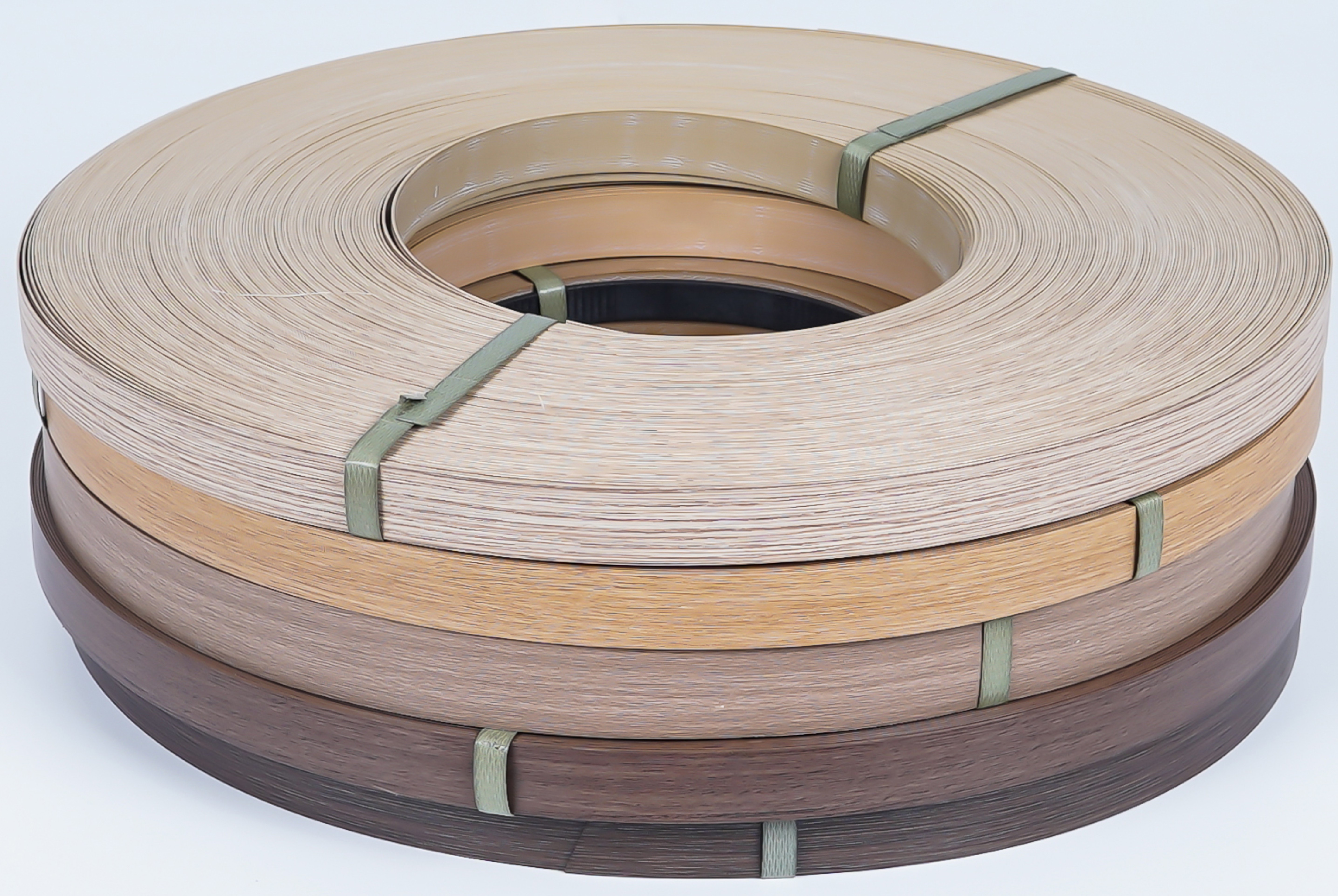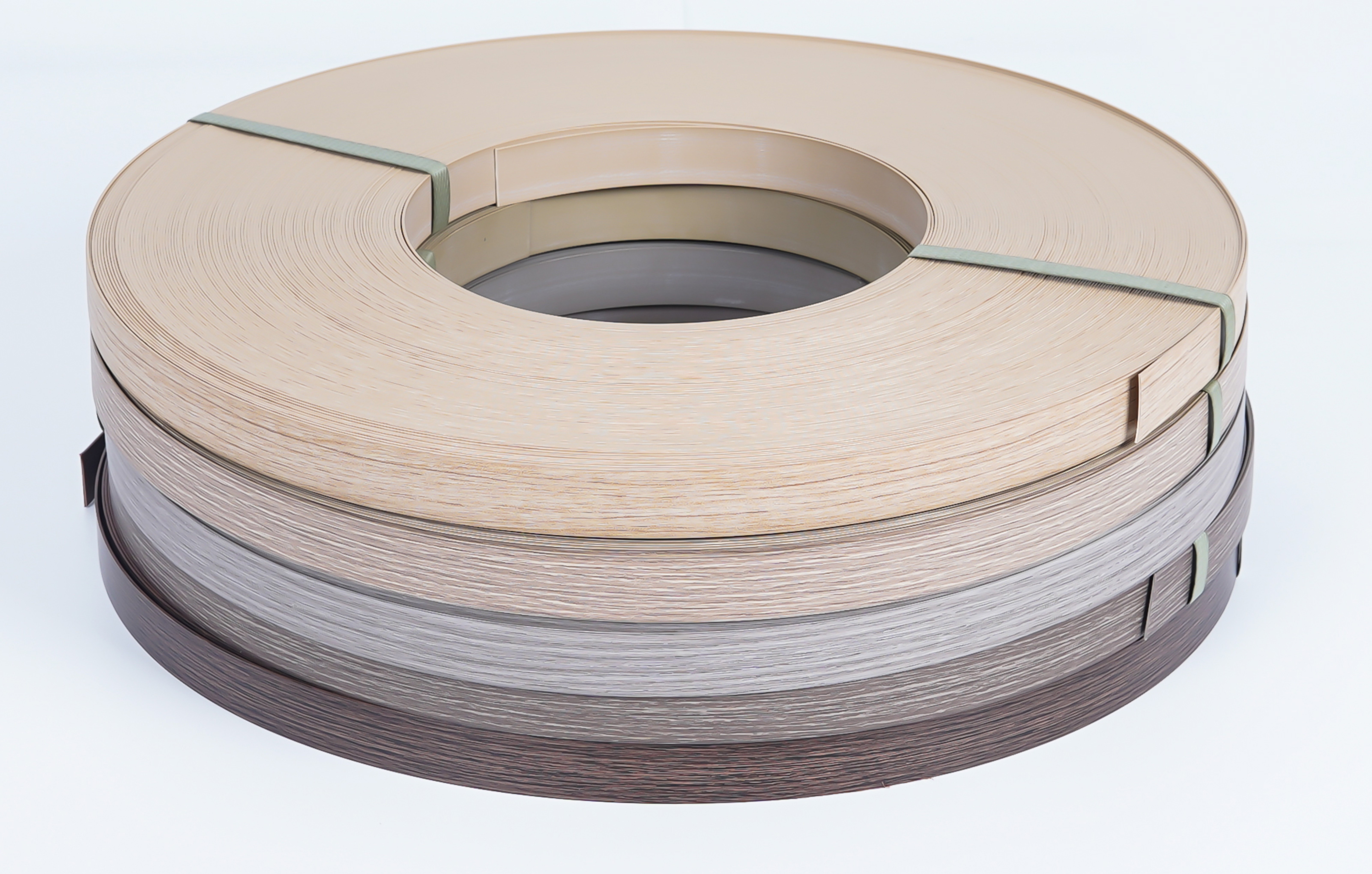
The edge is a design line, not a detail
In premium minimalist and light-luxury cabinetry, edges are seen. Slim panels, pale or matte surfaces and open shelving leave the banding exposed along every shelf front, door edge and carcass line. If the banding drifts in color, picks up a different sheen, or feels different from the board, the whole piece reads as cheaper than it is. That is why factory buyers specifying for this segment tend to treat edge banding as a finish decision rather than a consumable.
The short answer to the comparison: for this kind of work, ABS edge banding is generally the better fit, while PVC stays a sensible option where budget and standard indoor use are the main constraints. The rest of this guide explains why, and how to check it on samples before you commit a production run.
What ABS edge banding is, and how it differs from PVC
ABS (acrylonitrile butadiene styrene) is a thermoplastic edge banding material. The version positioned for premium furniture is chlorine-free, which matters to buyers working on projects with tighter material expectations or indoor air quality considerations. PVC edge banding is also a thermoplastic and remains the volume workhorse of the industry, valued for cost and availability.
In practical terms, the difference buyers notice is in the finish. ABS tends to hold color and surface consistency well, so a matte or textured band can sit closer to the board's own surface in tone and sheen. PVC can match color well too, but at the premium end the gap often shows in how uniform the edge looks across a batch and how the surface reads next to the panel.
One caution on naming: ABS and PVC are material families, not guarantees of a specific grade. Treat any trade name as a label and ask what the banding actually is before you build a specification around it.
Why ABS suits premium custom work, and where PVC still fits
For premium minimalist and light-luxury custom furniture, the case for ABS rests on three things that show up in the finished piece:
- A cleaner visible edge. Consistent color and surface help the band disappear into the design line instead of drawing attention to itself.
- Chlorine-free positioning. Useful when a project's material expectations go beyond standard indoor use.
- Finish confidence across a batch. Uniformity matters when a run spans many doors and panels that will be seen side by side.
PVC still earns its place. Where the edge is less visible, the specification is budget-driven, or the work is standard indoor furniture, PVC is a practical and widely used choice. The honest tradeoff is cost: ABS generally carries a higher material cost than PVC, so the decision should follow the visible edge quality the project expects rather than price per meter alone.
| Consideration | ABS edge banding | PVC edge banding |
|---|---|---|
| Typical positioning | Premium and design-led furniture | Volume and standard indoor furniture |
| Material base | Chlorine-free thermoplastic | Chlorinated thermoplastic |
| Visible edge finish | Strong color and surface consistency | Good color matching; finish varies by grade |
| Cost position | Generally higher | Generally lower |
| Best fit | Minimalist, light-luxury custom work | Budget-driven or less visible edges |
This table compares material families in general terms, not specific products or brands.
Checking samples before you commit
Samples are where this decision gets settled, because color and surface only prove themselves against your actual board. A few practical checks for factory buyers:
- Match against the real panel. Lay the band on the board you will use, in the lighting the furniture will live in, and look at it from a normal viewing distance, not just up close.
- Compare sheen, not only color. A close color match with a different gloss level still reads as a mismatch on a matte door.
- Feel the edge. Run a finger along the banded sample; the transition from panel to edge should feel consistent.
- Check batch consistency. Ask for several strips from the same run and compare them side by side.
At 广东圆洲新材料有限公司, samples are supplied as edge banding strips. They are self-paid, including freight, and sampling takes 3 days. Plan those conditions into your evaluation timeline rather than assuming free or immediate samples.
Working with the supplier
广东圆洲新材料有限公司 has produced edge banding from its Zhongshan, Guangdong production base since 2012, and its ABS高端封边带 is positioned for premium minimalist and light-luxury custom furniture. The team works in English and Chinese, and business enquiries are handled by 袁猛.
If you are weighing ABS against PVC for an upcoming range, the most useful first step is a specific enquiry: share a design reference, the intended application (for example, matte door fronts or open shelving), and the board you plan to match, and request edge banding samples under the terms above. That gives you a real edge to judge instead of a material name on a specification sheet.